Below are four steps that we have put together in order to create a more holistic approach to activism. They do not cover every aspect of what it is to be a holistic activist because that is an ongoing process. They are also not standalone; they’re a feedback loop. Acceptance fuels compassionate critique, which sharpens communication, which enables interconnected action. Together, they aim to shift activism from reactive firefighting towards proactive activism that leads to systemic change.
For a more detailed description of the steps, please download the Holistic Activism booklet on the main menu and/or listen to the audio booklet.
Step 1: Acceptance, Uncertainty and Presence
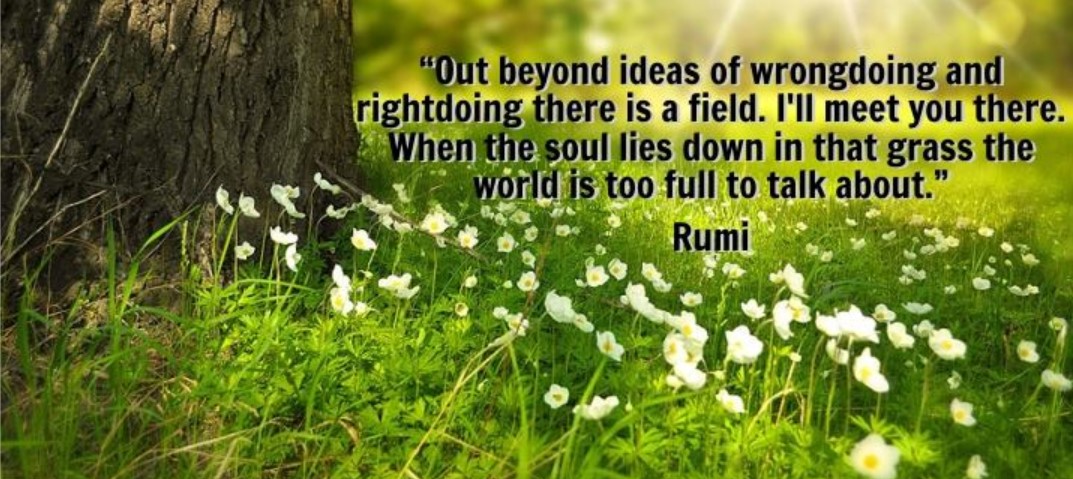
The first step is to fully embrace yugen, which is a Japanese term meaning “a profound awareness of the universe that triggers feelings too deep and mysterious for words”. In the words of writer and Accidental Gods podcaster, Manda Scott, it is to remind ourselves that a “heartfelt connection to all that is, forms the bedrock of human existence and is the pathway to human flourishing.”
From the mind’s perspective, it’s about finding comfort in uncertainty and embracing awe in the experience. So rather than seeking absolute truth in words, it is about discovering the divine in not knowing. Alan Watts once said that we can never fully understand the big picture because we are a part of it. This makes sense because our perception of the universe is always limited by our biology and evolutionary constraints.
Recognizing this can make us better activists, as it helps us become less attached to one opinion prevailing over another (a mindset that rarely brings about collective change). Instead, it encourages us to challenge our perspectives in ways that deepen our understanding and connection to both human and non-human nature, which we are all inherently part of.
In the words of Christopher Chase;
‘There’s a whole Universe that surrounds us, and lives within us, that connects us to each other. The atoms and energy that dance within you (and as you) have billions of years of history. Life is more precious than diamonds or gold. Yet our values are so warped that billions of humans don’t see this. We are taught to crave what is meaningless and ignore what has meaning.’
We can give ourselves permission to spend time immersed in this presence, simply as observers of the unfolding universe around us, without judgement. This is important because language, by its very nature, breaks what is ultimately complex into something that is much more simple and in doing so we lose a lot of detail along the way.
Even though letting go may sound easy, it can nevertheless feel like an enormous challenge. It is worth remembering that all of us let go when we fall asleep or when our minds surrender to an experience so powerful that it draws us into deep presence, such as listening to music.
Embracing acceptance and uncertainty as a pathway to presence and more empathetic communication
Letting go is also about embracing acceptance. It is important to emphasise that acceptance does not mean compliance. It simply means accepting that for better or worse, the universe has unfolded to this point. In the words of George Tsakraklides, acceptance is ‘not about sitting idle’. ‘It is consciously immersing yourself in reality’. And while the path that we take from hereon must involve learning from the mistakes of history and healing the trauma that has been left in its wake, it must also be about reconnecting to a state where we are deeply immersed in the unfolding present moment.
Acceptance is also about accepting our own feelings as they are right now as this helps us to avoid burying those feelings. Otherwise, they may play out in ways that impact those around us. Therefore, we should not feel guilty about applying the same acceptance and compassion to ourselves that we give to the wider world, because they are one and the same.
By embracing acceptance and uncertainty and the deep presence that it brings, we can re-forge our identities in something that lies outside of opinion. This gives us the opportunity to ground our identity in yugen and absolutely nothing in the mind can get in the way of that. Crucially this will make it easier to, in the words of Joseph Joubert, appreciate that ‘the aim of argument, or of discussion, should not be victory, but progress’.
That way, we are also better set-up to ensure that we do not project our own shadow into the activist work that we do while compassionately helping to steer others away from doing the same. Our focus then will be much less likely be about making our opinions win out over others. Instead, we will be better equipped to take an empathetic approach. Only by seeking the common ground that connects us can we create the foundation needed for collective change, as rationality and scientific truth alone are not enough to achieve it.
Step 2: Breaking the Cycle of Pain

Acceptance (as explored above) also involves accepting what lies within. This means embracing all of our emotions, positive and negative, processed and unprocessed. Without this, we risk projecting those unprocessed feelings onto others through our communication. Therefore, it is important that we extend the same compassion and acceptance to ourselves as we do to the wider world, as they are interconnected. By integrating heartfelt connection and acceptance into our activism, we empower ourselves to acknowledge both our own unprocessed feelings and those of others.
In the words of Alan Watts:
“There are people who are unconscious of their own dark sides and they project that darkness outwards into whoever the enemy may be and say…”there is the darkness, it is not in me”. Therefore, because the darkness is not in me, I am justified in annihilating this enemy… But to the degree that a person becomes conscious that the evil is as much in himself as in the other…to this same degree he is not likely to project it onto some scapegoat and commit the most criminal acts of violence upon other people. In order to admit and really accept and understand the evil in oneself, one has to be able to do it without being an enemy to it.”
A significant portion of the projection that Watts is describing here manifests in the way we communicate with each other. This is because communication can act as a conduit, both consciously and unconsciously to transmit unresolved pain onto others. For this reason, choosing to draw a line under the cycle of pain that we pass down from one generation to another and sideways to those around us, is an essential part of holistic activism.
Activism that transmits pain only adds to the existential problems that activism needs to tackle. However, activism that seeks to heal by drawing a line under the cycle of pain, helps move us towards a much-needed paradigm shift away from the catastrophic course that humanity is currently heading.
For this reason, acceptance, compassion and assertiveness go together because to be compassionate means fully accepting the other person as they are right now. But this does not mean that we shouldn’t show emotional boundaries. In fact, it is crucial that we do. That way we can work towards breaking the cycle of pain with a combination of compassion and assertiveness.
Compassionate Assertiveness
Being assertive does not mean ‘fighting back’. It is about preventing another person’s pain from having a negative impact upon you in the same way that the direct and indirect pain of possibly countless other people has had an impact upon the person who is trying to project onto you.
It is also about ensuring that you in turn, do not push your pain onto that person. Learning assertive techniques in combination with compassion is valuable as it allows us to shift conversations that perpetuate pain to ones that foster collaboration and meaningful progress.
By setting firm but compassionate boundaries with the intent of engaging in genuine, productive dialogue, we also help to create a space whereby unprocessed emotions and traumas can be properly processed.
Being both compassionate and assertive also helps us identify those individuals who are open to collaboration versus those who are only focused on conflict and division. This can help prevent burnout by allowing you to know when it is worth investing your time into conversation, when to walk away without resentment or when to focus on conflict resolution.
Compassionate assertiveness also cultivates empathy by encouraging genuine curiosity about others’ perspectives. This is very useful because looking for the common ground is another component of holistic activism.
Step 3: Looking for Intersection and Common Ground

We will not ‘save the planet’ with one set of values alone, and neither should we try. No single person owns the truth, yet so much discussion is worn down by our attempts at making one opinion win over another. This is as true in activist circles as it is elsewhere and it is almost always counterproductive, as well as being an ineffective use of our time.
This isn’t to say that your opinions are not important or that all opinions are equal, only that your opinion is less likely to have an impact if you go into a conversation with a fixed agenda. The paradox is that you have to let go of achieving a specific outcome in order to achieve a constructive outcome. Otherwise, there is a risk of becoming bogged down in the conflict that is directed by the cycle of pain. As Bill Bullard says, ‘the highest form of knowledge is empathy, for it requires us to suspend our egos and live in another’s world.’ Opinion on the other hand, ‘requires no accountability, no understanding.’
As mentioned in the previous steps, the key is to enter into any correspondence with acceptance, compassion and assertiveness. This will shine through in your communication and it will in turn lessen the risk of that communication descending into cognitive dissonance. I should say here what cognitive dissonance is. Cognitive dissonance according to Frantz Fanon is:
Sometimes people hold a core belief that is very strong. When they are presented with evidence that works against that belief, the new evidence cannot be accepted. It would create a feeling that is extremely uncomfortable, called cognitive dissonance. And because it is so important to protect the core belief, they will rationalise, ignore and even deny anything that doesn’t fit in with the core belief.
No single person owns the complete truth, yet so much discussion is worn down by our attempts at making one opinion win out over another. This is as true in activist circles as it is anywhere else and it is almost always counterproductive and an ineffective use of our time.
This isn’t to say that your opinions are not important or that all opinions are equal, only that your opinion is less likely to have an impact if you go into a conversation with a fixed agenda. The paradox is that you have to let go of outcomes to some extent in order to achieve a constructive outcome, especially as that outcome should be expected to be different to the one that you originally intended. Otherwise you risk becoming bogged down in the conflict that is directed by the cycle of pain.
The key is to enter into a conversation with the acceptance that the outcome might be different to what you have in mind. This is an approach known as co-regulation and is a term used in psychology that means a ‘continuous unfolding of individual action that is susceptible to being continuously modified by the continuously changing actions of the partner’.
The process of activism as a whole needs to be seen as an ongoing process that is always open to modification. As long as there is language there will always be a need for activism because even in the most utopian of scenarios there will always be a need for vigilance. Otherwise there will always be a risk that the reductionist nature of language will, in combination with the mind’s tendency to equate opinion with identity, lead to tunnel vision and ultimately, cognitive dissonance. What we do not want to do for example is replace neo-liberalism with some other ‘ism’ that is just as socially and environmentally lacking.
It is important therefore to emphasise that the ongoing nature of activism should not be seen as a chore. Instead we need to convert activism from something that is reactionary and conflict-laden into something that is regenerative and integral to our social fabric. After all, activism is as much a part of the nature of human society as everything else that we hold dear, in all its beauty.
This regenerative approach to activism must be rooted in our desire to look for areas of common ground or points of connection. Together with acceptance and an understanding of the cycle of pain, many people with different ways of looking at the world can find a way of working together.
In other words, by looking for areas of common ground, you are helping to pave an easier path towards discussing issues where there is less common ground. This is because your relationship is already built on the desire for cooperation rather than the need to gain moral superiority. The fact that you are also employing acceptance, compassion and assertiveness means that the tone of the interaction will either be constructive or you will know that it is necessary to walk away.
Step 4: The Art of Critical Thinking
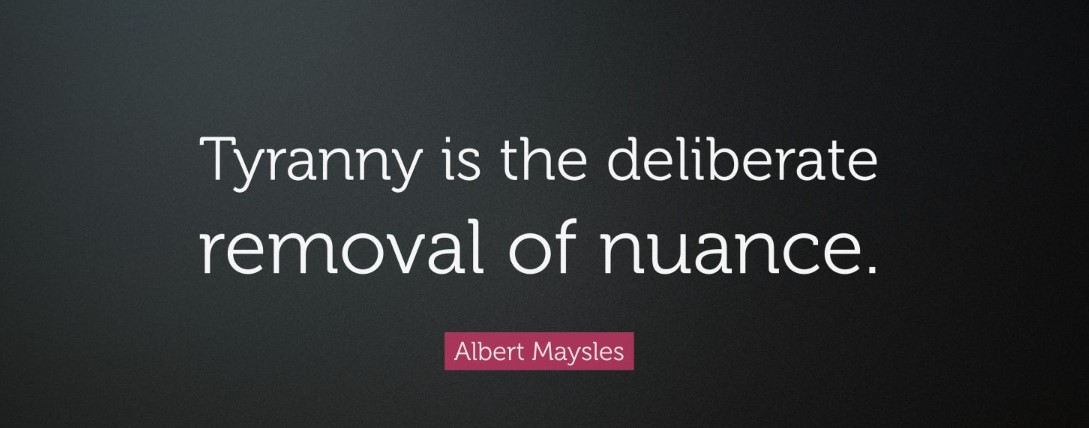
The nature of language is such that it reduces the complex into bite-size conceptual chunks and there is nothing wrong with that (it really can’t be any other way). But in exchange for the useful tool that language provides, we do have an obligation to understand that the way we compartmentalise our understanding of the universe through discourse is limiting. In other words, the way we frame the world through language is actually a simplification of something that is much more complex.
Therefore, holistic activism is about approaching our opinions and perspectives as as being part of an ongoing conversation. Importantly we need to do this in a way that feels joyful and regenerative. This will not only reduce the risk of burnout, it will also enable us to build a better movement for change. However, for this to happen, it is important that we also embrace the other three steps of Holistic Activism. The ability to think critically relies heavily upon looking for the common ground rather than seeking to have our opinions validated.
This in turn requires that we are able to step outside of the cycle of pain as part of that process. Also, spending time in a space outside of language is a great precursor to critical thinking because it roots our ‘identity’ into something that is not fully based on the concepts that we generate through mind. This better opens us up to looking to add nuance to our existing perception of what is right and wrong.
Critical thinking will not work nearly as well if it is merely about one person being right and the other wrong (even if that sometimes happens to be the outcome). That only reinforces cognitive dissonance as well as the polarities that critical thinking is meant to untangle.
This is why it is imperative that the focus is on adding layers of nuance to what others are saying, as all parties need to come out of the other end with a sense of ownership of the outcome.
For example, if you disagree on an often controversial topic such as ‘overpopulation’ the focus can be placed more on examining the issues that are undercurrent and importantly where they intersect with those issues that may be more important to you. This could, for example be the role that mutual aid can play in empowering communities and enabling universal access to healthcare and education as part of a wider approach to a more equitable, low carbon world. Populations will stabilise in this scenario irrespective of whether you or anyone thinks that overpopulation is an issue or not.
Therefore you can connect with others who may not share your opinion, and in doing so, find the areas of interconnection in a broader movement of movements that will have within it a multitude of opinions. The planet doesn’t care about a single opinion but it will be profoundly impacted by a massive movement for change that inevitably must carry a diversity of opinion. Critical thinking is an essential component of being able to make this happen.
For example, one critical thinking skill is the ability to recognise when an issue is being broken down into a dichotomy. This technique can often be what is known as a false dilemma and it forces people to take one of two sides. In town planning for example, high density developments are often justified on the grounds that they prevent urban sprawl and that if you oppose high-density development in your neighbourhood, you must therefore be a proponent of low density housing on the urban fringe. This is highly problematic.
An argument such as this denies the more complex nature of town planning and it ignores the fact for example, that there are thousands of empty houses and other retrofittable spaces that are empty. Furthermore, a considerable amount of ex-industrial land that could be developed, is left vacant by speculative property developers. In other words, there are other means of tackling the threat of sprawl other than the need to always regard high density development as a solution. Of course high density can play a role but the assumption that this style of development is always going to be the most sustainable approach in response to the threat of urban sprawl benefits particular vested interests. It also marginalises a whole range of other issues such as David Holmgren’s Retrofitting Suburbia movement.
Without critical thinking, free speech will always favour those who have the power and money to push their narrative at the expense of others. This can lead to everything from climate change to mass shootings.
This is why both free speech and the ability to think critically are both important as promoting one while denying the other can lead to cognitive bias on a massive scale. Without critical thinking, free speech can even filter into the education system where perspectives can start to be regarded as un-disputable knowledge.
What is important is that critical thinking focuses on the topic and does not attack the person (ad hominem attack) who has written or said what you are critiquing. As previously stated, critical thinking must be in sync with acceptance, compassion, assertiveness and a desire to find common ground. In other words, it must be part of a holistic approach to activism that doesn’t feed into the cycle of pain.
It is also crucial that we use critical thinking as a means of ensuring that terms such as ‘sustainability’ and ‘resilience’ do not get appropriated by particular groups and particular interests in order to suit particular agendas. We do not want sustainability for example to become an empty, hollow term used to justify developments that for many reasons would not be deemed as sustainable. It is about having that vigilance in place, not just for those around us but for ourselves as well.
For a more in-depth introduction to the four steps, please read/download the Holistic Activism Booklet (link on the homepage). Feel free also to print and distribute it.

 Holistic Activism