What is Town Planning Rebellion?
Town Planning Rebellion is a movement based on holistic activism principals that is set-up to highlight the critical role that land – use planning must play in combatting the climate and ecological emergency.
Why have a Town Planning Rebellion?
“The global construction and real estate industry is often referred to as the 40 Percent Industry – as they are responsible for roughly 40 percent of emissions, 40 percent of waste, and 40 percent of energy, materials and water expenditure.”
This does not factor in the environmental impact of building on farmland and natural habitat. It also does not factor in the short lifespan of many of the buildings that are currently under construction and that will not be fit for purpose in a few decades time. Moving our focus away from ‘development’ ( and an economy that is reliant upon pouring endless concrete) must therefore be a central part of our urgent transition to a low carbon society.
Urban and regional planning must play a critical role in mitigating the climate and ecological emergency and TPR intersects with movements around green energy, regenerative farming, reducing car usage and biodiversity preservation.
For example, food miles are increasing due to development on the food bowls of our urban fringes. Urban development is also encroaching into habitats of iconic native animals such as the koala.
Our organisation is dedicated to ensuring that changes to the way we approach urban and regional planning is placed as a matter of priority and we have a list of ten focus points.
Of course, any outcomes will be much more nuanced and more far reaching than the focus points that we are putting forward, as we are one part of a much larger conversation.
Holistic Activism, Extinction Rebellion and a Movement of Movements
Town Planning Rebellion recognises that a holistic approach to activism is required – one that understands we will not reverse the climate emergency with the same behaviour that led us into it. This includes being part of a wider movement of movements that has behavioural and systemic change needs at it’s core (feel free to check out the rest of the Holistic Activism website to find out more).
We also recognise the importance of systemic change towards a post-growth society. As long as we continue to operate under an economic system that is driven by development, we can only ever make cosmetic changes with negligible long term results.
Our role in a broader global movement
Our response to the climate emergency must involve working both at the local level and at the international level.
It is therefore important that we share our knowledge with the rest of the world as part of a wider program of mutual aid where ideas, resources and knowledge are shared freely across borders. This will enable communities across the world to be best equipped to create resilient, regenerative communities that draws down carbon and enables the re-wilding that is required to help reverse the sixth great mass extinction.
It is essential that the world works together by sharing ideas and resources by de-colonising aid and approaching it instead as a sharing of ideas that will lead to the creation of ecologically resilient communities across the world. This would fully embrace everything from affordable housing, regenerative farming, re-wilding and permaculture through cooperation rather than coercion.
How TPR aims to intersect with other movements
TPR’s ten focus points intersect with many other movements in the broader movement that is required to create a degrowth based post-carbon society. This is why town planning is such an important component of reversing the climate and ecological emergency and why we hope to connect with many other campaigns as part of a broader movement for change.
For example, our focus on ending sprawl and its encroachment onto wildlife habitat feeds into the movement for preserving biodiversity and ending old growth logging.
Ending sprawl together with embracing the Retrosuburbia Movement will also help to ensure that we reduce food miles by preserving the food bowls on the fringes of our cities as well as utilising our private gardens as a resource for growing easily perishable food items that can be picked fresh.
We also intersect with the green energy movement but with the knowledge that green energy can only have net benefits if it is underpinned by sound town planning and design within the context of scaling down to a post growth society.
Town Planning Rebellion’s Ten Points of Focus
Our principal focus is to ensure that the many thousands of houses and units that lie vacant within our towns and conurbations are inhabited. In Melbourne alone, there are currently up to 82,000 empty homes.
This connects with our second focus, which is to embrace the retrosuburbia model as a means of increasing food security in the existing built form. Retrosuburbia is a growing and established movement and we strongly recommend that you connect with it. You can read more about it here: https://retrosuburbia.com
Our third focus is to end all housing development on or beyond the urban fringes of our towns and cities. Exceptions would be made for developments that are part and parcel of a wider project to draw-down carbon into the soil, either through regenerative farming practices, rewilding (in cooperation with First Nations people), biomass planting projects or bush regeneration.
Our fourth focus is to champion a new approach to urban consolidation or the construction of higher density housing within existing residential areas (the greyfields). Under a post growth model, urban consolidation would no longer be used as a green light to raze entire neighbourhoods to the ground or to build sub-standard developments for the investment market.
Future development would instead incorporate existing robust and retrofittable buildings (see the third focus). while housing stock that is less robust and less easily retrofitted would be replaced… but only with higher density public housing/cooperative housing/build-to-let style developments.
This is very different from the current model of development where up-zoning forces land prices to increase which, in turn, prices people out of neighbourhoods.
By removing the policy of zoning and replacing it with selective, well designed densification projects across all areas, for the purposes of providing long term rental accommodation, we can reduce the risk of gentrification. Additionally, we will avoid the environmental expense of losing housing stock (including heritage buildings) that could be retrofitted and/or better utilised.
Our fifth focus is that further road building project should not proceed unless there is good reason, such as safety. Our focus from hereon will be upon improving and interconnecting walkability, public transport networks and bicycle pathways.
Our sixth focus is to retrofit existing built spaces that are currently not used for housing such as converting disused office space. This will help to increase densities if required, without the need for additional development.
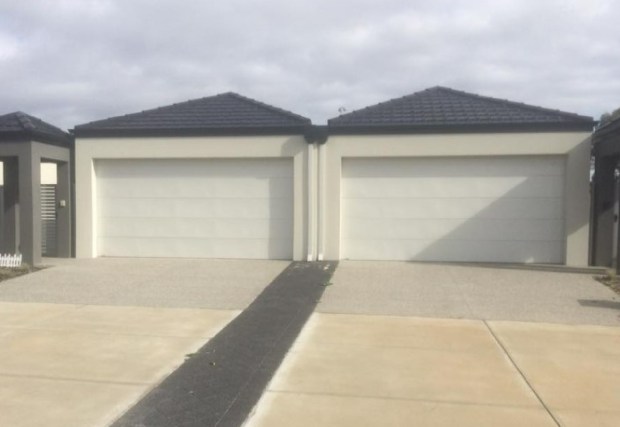
Retrofitting existing built spaces includes replacing areas set aside for cars for accommodation. Meanwhile it is essential that this kind of development comes to an abrupt end.
Our seventh focus is to embrace the growing demand for alternative types of living such as granny flats and tiny houses. These can be slotted into existing communities with minimal impact on the land and on surrounding flora and fauna… and a growing number of people are choosing this lifestyle choice.
Our eighth focus is to place more emphasis on redeveloping ex-industrial land (and land that was once utilised for other purposes). This is known as brownfield site redevelopment. It is a slow process but it can have positive net benefits if it is done well.
We will ensure that this kind of development will be approached in such a way that nature is reintroduced into urban areas and that carbon neutral building techniques are employed throughout. Christie Walk in Adelaide is a good existing example of a brownfield regeneration project that has created more housing while improving biodiversity. However, future developments of this nature must incorporate a strong component of public housing.
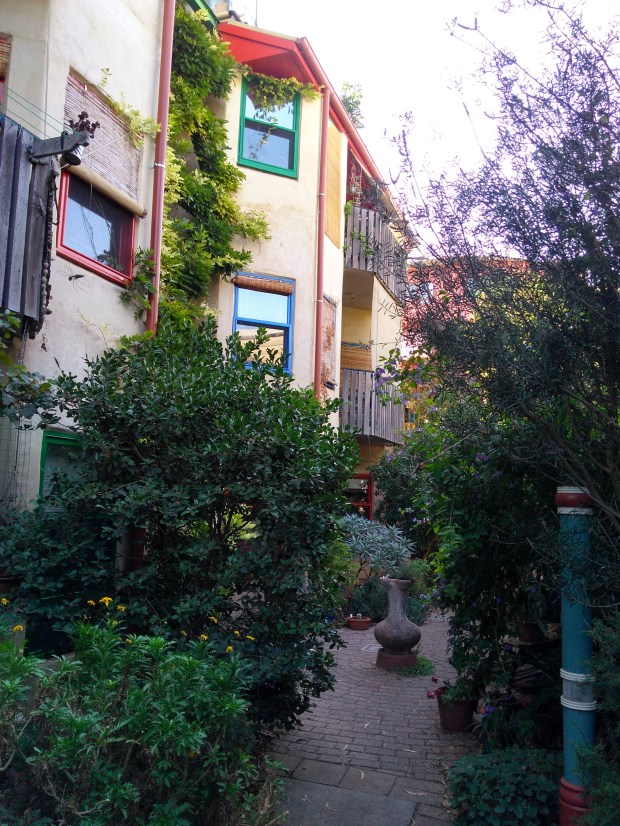
Christie Walk in Adelaide is an example of a successful brownfield regeneration project that has increased the population of human and non-human nature but future developments must include public housing.
TPR suggests that public/private consortiums are formed that will appropriately redevelop brownfield sites and selective areas of the greyfields. This will ensure that there is a strong component of public housing in all developments. You can read more about this here:
Our ninth focus is to ensure that passive solar and energy efficient design as well as the utilisation of carbon neutral or carbon negative building materials is intrinsic to all future developments.
Our tenth focus is to reduce future development in high bushfire risk areas/flood plains by compensating people who own vacant lots with a plot of land in what will develop into a small number of newly built eco-townships. These townships will be built to be easily defended in bushfire scenarios and will constructed around around permaculture principles.
This will protect large areas of bushland from future development while providing security to people who would otherwise live in high bushfire risk areas and high flood risk areas.
First Nations Sovereignty
Town Planning Rebellion recognises the sovereignty that First Nations people have over the lands that we call Australia and we recognise that those lands were never ceded.
We strongly recognise the need for treaties to be signed with First Nations people, not only to start to heal the immense traumas perpetuated through colonisation but also to ensure that First Nations culture is central to the path that we collectively take forward.
TPR recognises that indigenous culture and knowledge is crucial to healing the decades of damage caused by colonisation. We also understand that what we have to say is one part of a wider conversation that must include the representation of First Nations people and for it to be on their terms.
Population
It is important that we discuss the demand issue of town planning as well as the supply issue. This means that we must be willing to have nuanced, rational conversation on the issue of population. In Australia, around 40% of population growth comes from births minus deaths and the remainder is from migration.
While migration has many positive benefits, it is the least equitable and proactive way of dealing with global issues around poverty and high fertility as there are far more people left behind when people are forced to leave their homeland in search of a better life.
This is not to criticise migration, only that it needs to be treated as one component of a much more holistic approach to the population issue in general. The post-growth approach that TPR advocates is underpinned by international collaboration through proactive/mutual aid that creates resilient, empowered communities across the world.
In our current neoliberal society, the driving force behind migration is primarily to grow the development-based economy and any progress towards a population naturally stabilising or declining is portrayed as being a bad thing. This attitude needs to change.
What is required is a shift in paradigm towards a degrowth model that can comfortably accommodate the inevitable decline in fertility rates that occur when important social parameters are met. Also, helping to create socially and environmentally resilient local communities across the globe through mutual aid will over time, reduce the need for people to migrate.
Of course, migration will continue to happen and this is a good thing but combined with taking a proactive global approach, we expect that future migration policy positively discriminate in favour of refugees, family reunions and people who feel that their role in healing the earth can be better served in Australia.
Due to the nature of the multiple crises that we are facing, we can expect populations to fluctuate in the short to medium term as more people become displaced. This can be accommodated without pouring too much more concrete by focussing on retrofitting/converting empty and under-utilised buildings. There are 82,000 empty homes in Melbourne alone (and potentially hundreds of thousands of empty bedrooms).
At the same time, we need to keep challenging the neo-liberal line that populations must keep increasing in order to cater to our ageing population. In order for any population to stabilise we must expect to have a larger demographic of older people for a while. Deliberately growing the population in order to cater to an ageing one, only kicks the can further down the road. An ageing population is very manageable in a post-growth society as our economy will be focussed on welfare and many growth-based activities such as construction (especially for new-builds) can make way for roles that can better accommodate an older demographic.
In conclusion, migration policy should not be tied in with a ‘development’ driven agenda as it is now. Instead, it must be tied in with an approach that embraces the stabilisation and decline in populations that occur when important social parameters are met. In the meantime, populations will fluctuate as the carbon and ecological emergency intensifies. This can be accommodated through TPR’s ten points of focus. In the medium to long term, populations across the board will naturally decline as the impact of a degrowth based, caring economy supersedes the current pro-growth, pro-natalist economic system.
As populations start to stabilise across the world, the need to construct new dwellings to accommodate more people will reduce and the emphasis will transition to which buildings we should preserve. Sadly, many contemporary homes are so poorly constructed that they will have to be demolished with the space returned to non-human nature. Migration therefore will become less a catalyst for new construction and more an opportunity to renovate the most robust of our existing houses and communities.
By helping to create a world that is comfortable with non-coercive population decline, we can better remove the engines that drive all kinds of growth, whether it be in population or per capita consumption.
Mutual Aid
Our response to the climate emergency must involve working both at the local level and at the international level. Of course, radical town planning policies will need to be a central component of that approach.
What is important is that we share our knowledge with the rest of the world as part of a wider program of mutual aid where ideas, resources and knowledge are shared freely across borders. This will enable communities across the world to be best equipped to create resilient, regenerative communities that draw down carbon while enabling the rewilding that is required to help reverse the sixth great mass extinction.
We will share our ideas on sustainable town planning as part of an ongoing conversation on the global stage. It is essential that the world works together by sharing ideas and resources but it needs to be very different to the way it was done in the past.
In other words we need to decolonise aid and instead approach it as a sharing of ideas that will lead to the creation of ecologically resilient communities across the world that can fully embrace everything from regenerative farming, First Nations approaches to re-wilding, and permaculture through cooperation and not coercion.
Town Planning Rebellion’s role in tackling the housing crisis
Town Planning Rebellion is actively working on solutions to end the housing crisis while also bringing emissions down to meet the challenges of tackling the climate and ecological emergency.
“What we know for sure is that Australia’s housing crisis cannot be solved without systemic change. The good news is that this is a wonderful opportunity to reimagine our society to suit a steady-state model of living that deeply understands that we are all part of nature and not above it.”
Links
Town Planning Rebellion has put together two articles on the housing crisis in Australia. The first outlines how we got here and the second puts forward the approach that Town Planning Rebellion is putting forward:
We are also strong supporters of The Neighbourhood That Works Project and you can check their website out here:
https://ntwonline.weebly.com/?fbclid=IwAR3-nV4-nuotxbkQs5ugQMmYJ2%20rqSF0pzmgWj2E5HLR2_bItB2Bbv2gDDI
You can also read the Town Planning Rebellion approach to the asbestos issue here:
https://independentaustralia.net/life/life-display/working-towards-an-asbestos-free-future,17004
We also have a Zoom talk on YouTube that you can watch:
Joining Town Planning Rebellion
If you connect with what we have to say, we warmly invite you to join us and to play as large or as small a role as you see fit. We really want to grow this movement and are at the very beginning but time is short.
The role of TPR is to share our ten points of focus with as many people and groups as possible, so that we can add to the ongoing conversation. This includes our approach to Mutual Aid, population and the need for treaties with First Nations people as well as our adherence to Holistic Activism principles.
There are numerous ways of connecting with us:
We provide one-on-one support, give talks, webinars and run interactive workshops on a semi regular basis and travel around the country to do so. Please contact us if you would like to interact with us in any way.
As a holistic activist based organisation, we recognise that it is a movement of movements that is required and not a single movement as that would be susceptible to division, so our work is involved in building on areas of intersection.
We can also provide support to individuals and groups in countries other than Australia to set-up a town planning related movements.
To join us please go to https://holisticactivism.net/contact and put TPR at the top of the message.
We also have a Facebook group: Town Planning Rebellion (TPR)
 Holistic Activism